Camping Checklist & Trip Planner Printables (PDF Pack)
Plan and pack any camping trip: trip-type selector, master checklists by category, temperature clothing planner, meal and cooler plans, setup and teardown sequences, and a post-trip debrief.
Get it on Gumroad — $14 →Look inside
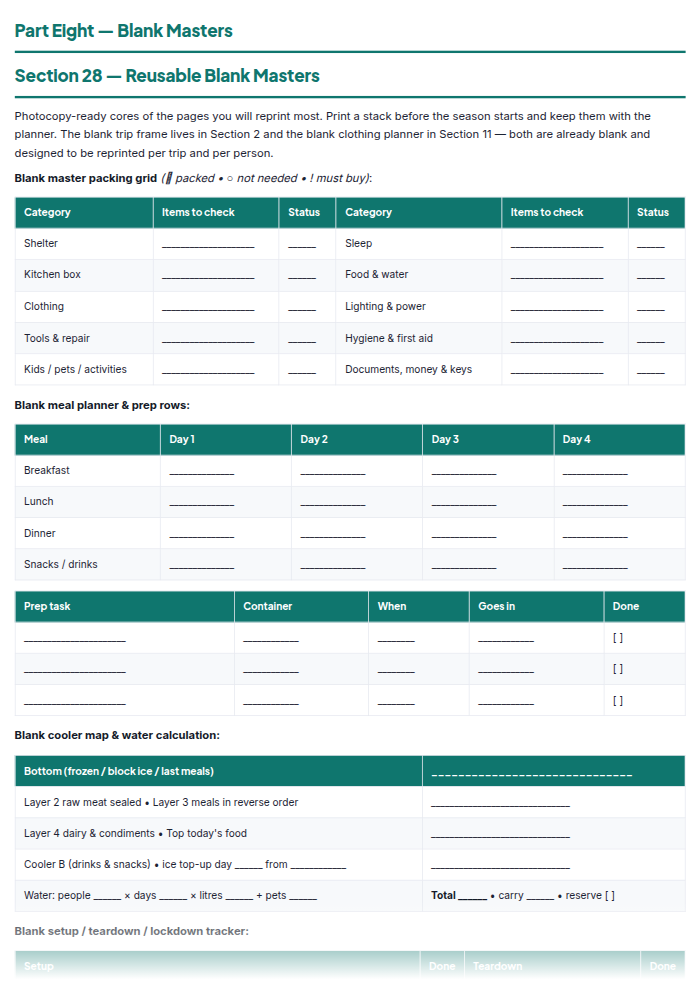
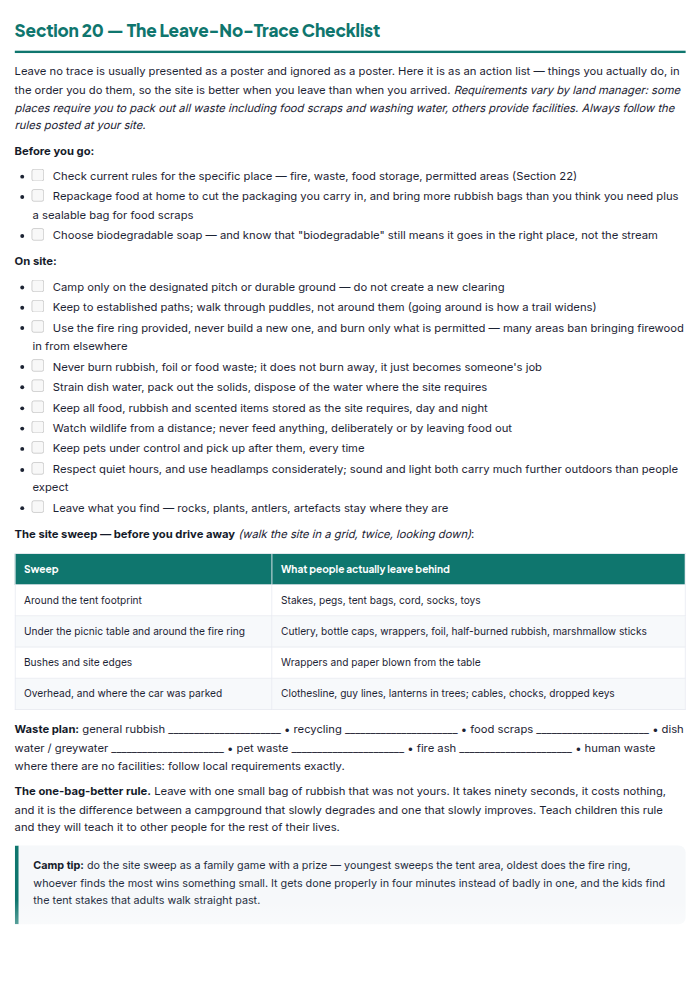
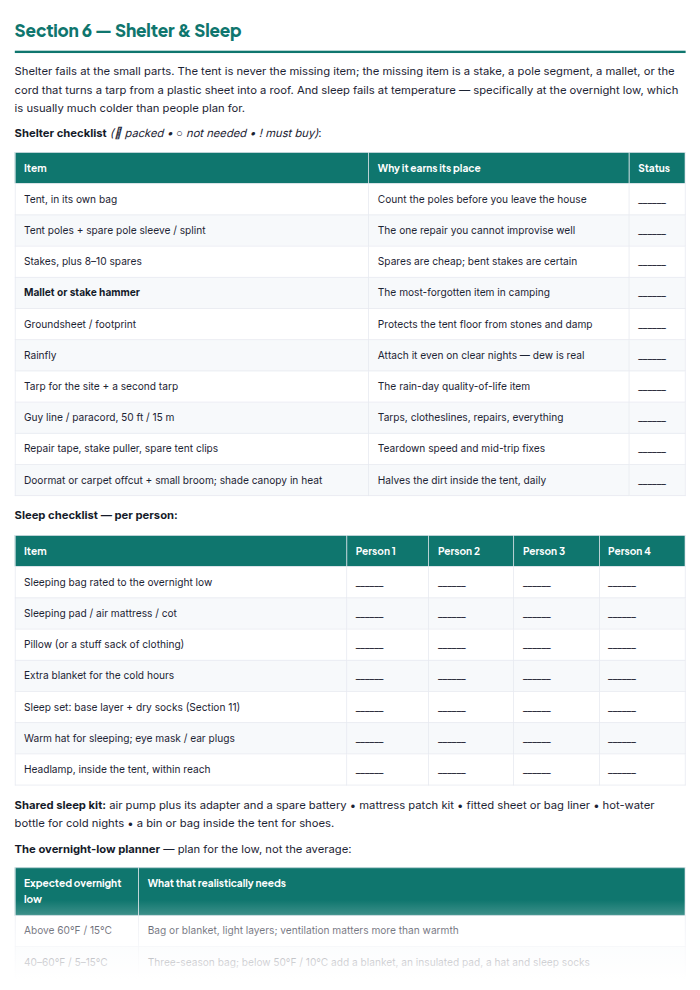
What's inside
The Trip Frame
The Master Packing Checklists
Clothing & The Kitchen Box
Food & Water
On Site
Rules, Briefing & Weather
Between Trips
Blank Masters
Questions people ask
I only do simple car camping. Is this overkill?
No — car camping is the default the whole kit is built around, and the worked example is a family of four at a drive-up site with a dog. Section 1 asks what kind of trip you are taking and tells you which blocks to skip; anything that does not apply gets marked "not needed" and stops bothering you. Most people end up using about two-thirds of the pages, and the same two-thirds every time — which is exactly the point of a master list.
Does it tell me the fire and wildlife rules for where I'm going?
It cannot, and it says so plainly. Fire restrictions, firewood transport rules, wildlife food-storage requirements, pet policies, water potability and permits differ by country, region, park and season, and they change from week to week. What the kit gives you is a research page that makes you ask the right questions of the campground or ranger station, write the answers down, and carry them with you — plus a table showing how each answer changes what you pack. Always follow the current local regulations and the guidance of the land manager or campground host.
Is this a survival or first-aid guide?
No. It is a planning and packing workbook — not medical, safety, legal or professional advice — and it does not teach survival, wilderness or first-aid skills. The first-aid section is an inventory checklist for building and checking a kit, with a clear recommendation to take a certified course from a qualified instructor if you want the skills to use any of it.
Free guides that go with this
Camping Checklist: What to Pack So Nothing Ruins the Trip
A family camping checklist of what to pack: category tables, the camp kitchen box, cooler packing order, clothing by overnight low, and a setup sequence.
How to Make a Social Media Content Calendar (That You Keep Using)
How to make a social media content calendar you actually stick to: pick 5 content pillars, set theme days, plan a month in 45 minutes, and batch the work.
3 ready-to-send client email scripts + red-flag checklist — see the RESELLOLABS quality before you buy anything.