Employee Training Manual Template & Onboarding Kit (PDF)
Build a real training manual: needs audit, role scorecard, task cards, the 4-step teach method, day-one and 30-60-90 onboarding plans, competency matrix and cross-training grids.
Get it on Gumroad — $24 →Look inside
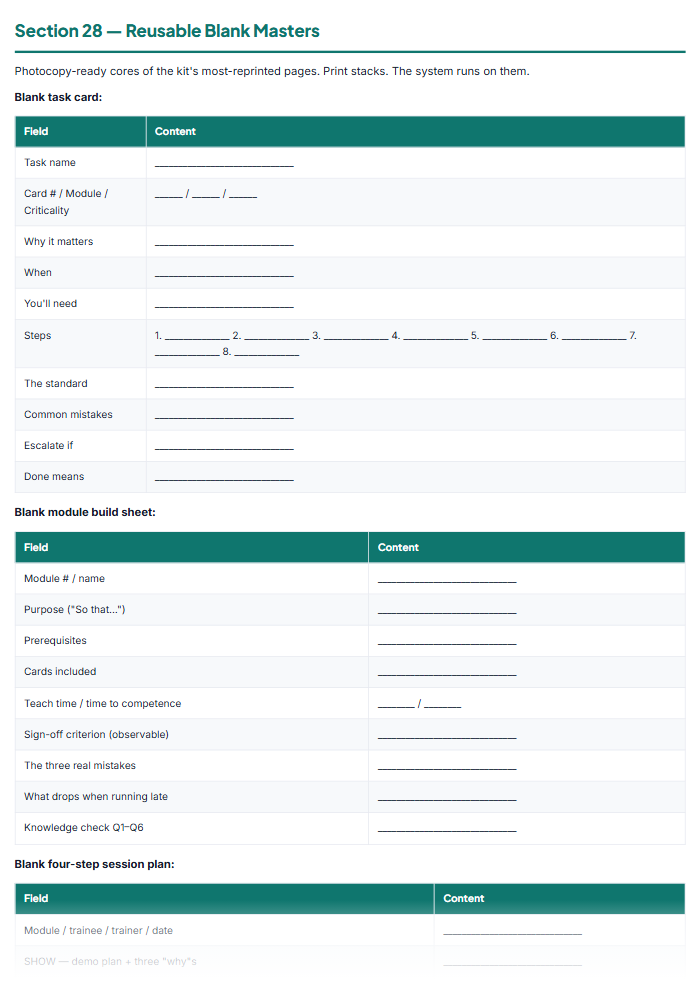
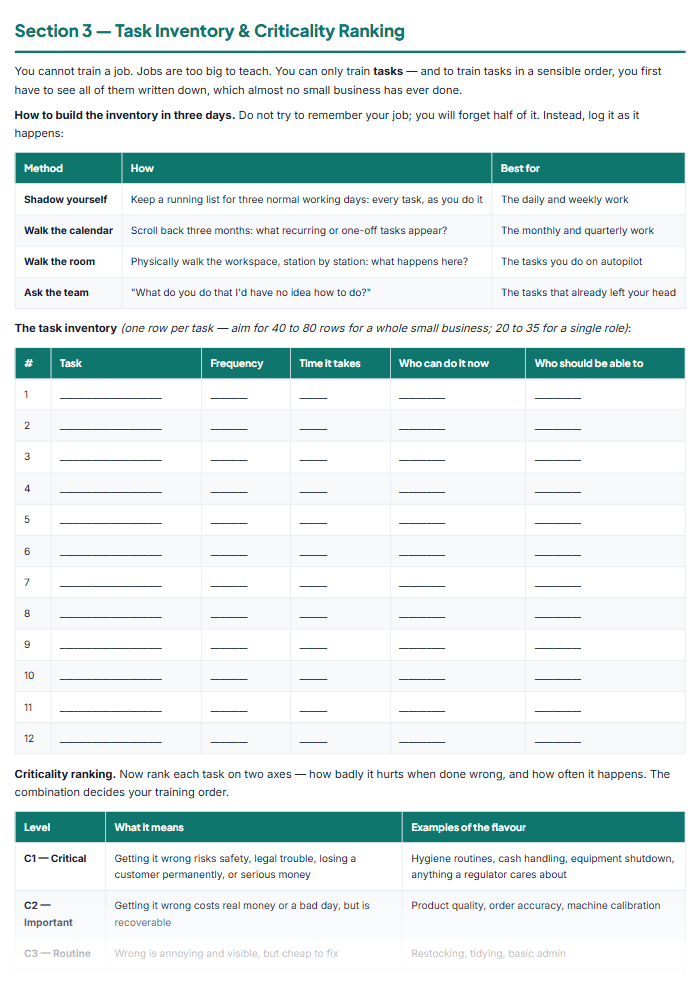
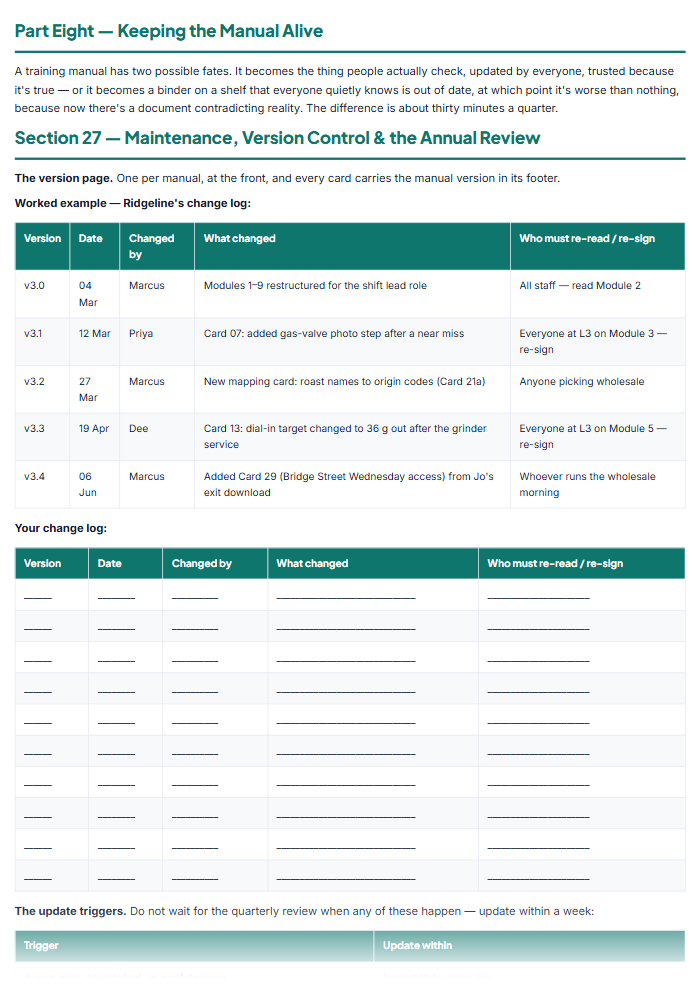
What's inside
Before You Train Anyone
Building the Raw Material
The Teaching Method
A Complete Example Module
Onboarding: The First 90 Days
Proving Competence
Coverage & Continuity
Keeping the Manual Alive
Questions people ask
Is this an employee handbook or a set of workplace policies?
No — deliberately not. This is a training system: how to work out what to teach, how to write it down, how to teach it, and how to prove it landed. Contracts, required policies and anything resembling an employee handbook template are legal documents governed by the law where you operate, and template wording from the wrong country can be worse than none at all. The kit shows you exactly where those documents belong, keeps them separate from your training material, and says plainly that they should be drafted or reviewed by a qualified employment lawyer or HR professional in your own jurisdiction. Nothing here is legal or HR advice.
I already have written procedures. Is this redundant?
The opposite — written procedures are the ideal raw material for this kit. A procedure describes how a task is done; this kit is about getting it into a human being. You run your existing pages through a nine-point rewrite test, cluster them into modules that can be taught in one sitting, teach them with the four-step method, and sign them off on a competency matrix with real evidence behind it. If you already have procedures, you are starting at chapter two.
Will it work for my kind of business?
It is built to be industry-neutral: the same audit, cards, modules, sign-offs and coverage grids work in a workshop, a shop, a clinic, a kitchen, a site or an office. The worked example is a nine-person coffee roastery hiring its first shift lead, chosen because its logic — high-risk daily routines, judgment calls under pressure, and one owner who quietly knows everything — transfers cleanly to almost any small business.
Free guides that go with this
How to Write a Training Manual for Your First Employees
How to write a training manual your new hires can follow without you: task inventory, show-do-check sign-off, module structure, and a 30-60-90 day plan.
How to Make a Social Media Content Calendar (That You Keep Using)
How to make a social media content calendar you actually stick to: pick 5 content pillars, set theme days, plan a month in 45 minutes, and batch the work.
3 ready-to-send client email scripts + red-flag checklist — see the RESELLOLABS quality before you buy anything.